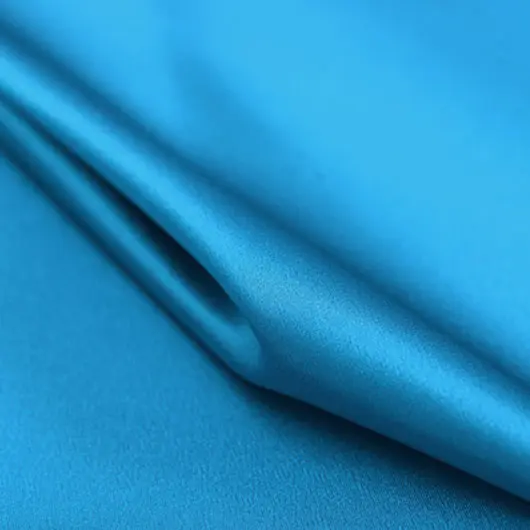
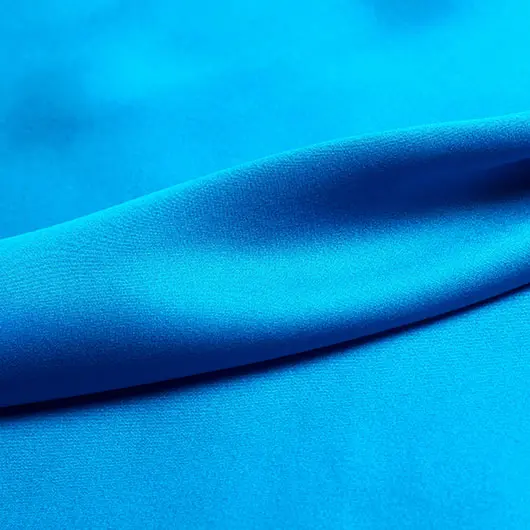
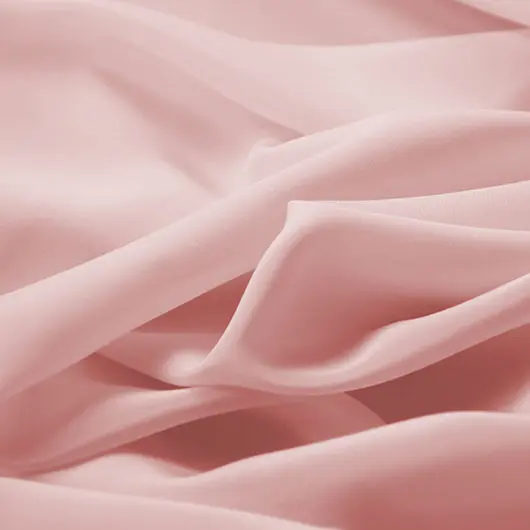
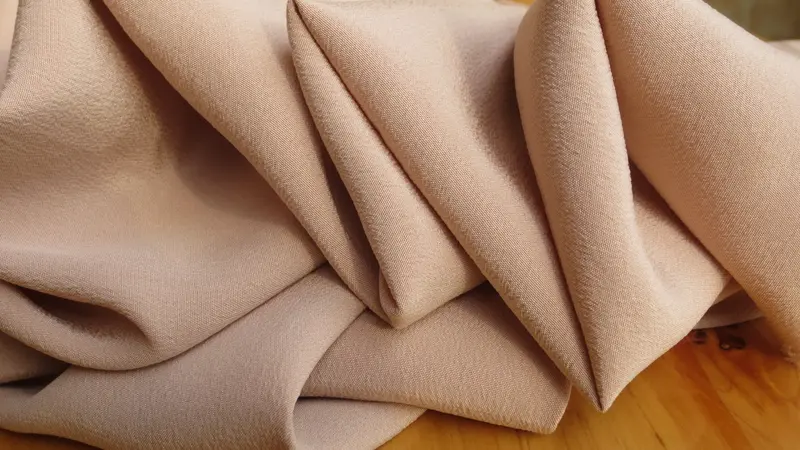
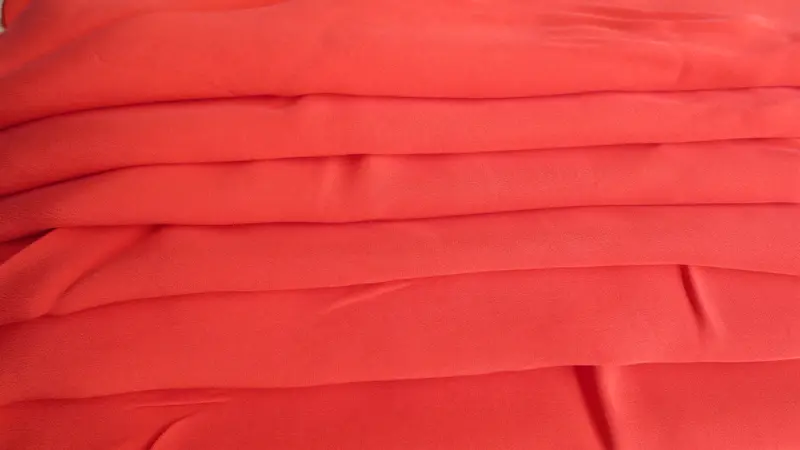
PHOTOGRAPHED FROM OUR STOCK
The cloth behind these terms
Unretouched photographs from our own floor. Colour varies between dye lots; the swatch card is the only reliable reference.
BUYING SILK · 100% MULBERRY SILK · FROM A CHINESE MILL
The cheapest insurance in dyeing — and the step most often skipped.
A lab dip is a small piece of the actual fabric dyed to your colour, sent for approval before the bulk lot is dyed. It exists because colour on a screen, on paper and on cloth are three different things, and because the only way to know what a dye recipe does to a specific silk is to run it.
Every custom colour we dye starts with one. It adds days to the order and it is the reason a 40-metre lot does not come back the wrong shade. The dip is dyed in the same house that will dye the bulk — that detail matters more than any other in this process.
A Pantone chip is printed; a monitor emits light; silk reflects it. Two conversions sit between the colour you picked and the colour you get, and the dip removes both.
The same recipe on charmeuse and on crepe de chine will not read the same, because the surface reflects differently. Dip the fabric you are actually buying.
A colour can match under the showroom light and split under daylight. Look at the dip in the light the garment will be worn in.
| Step | What happens | Who signs off |
|---|---|---|
| 1. Reference | You send a physical swatch or a Pantone reference | You |
| 2. Dip | We dye a small piece of the actual fabric | We dye, you receive |
| 3. Approval | You check it in your own lighting and confirm or ask for a re-dip | You |
| 4. Bulk | The approved recipe is scaled to the production lot | We dye |
| 5. Retained sample | A cutting from the bulk is held for repeat orders | We hold |
Approve the dip in the light the garment will be seen in, and against the trims it will sit next to. A colour approved under a warm showroom lamp can split badly under daylight — the effect is called metamerism and it is invisible until the garment is on a body in a window. If a dip has to match a zip, a lining or an existing garment, put them side by side under both light sources.
One dip is rarely the last one. Budget for a second round in the schedule rather than treating it as a failure, and be specific when you reject: "too yellow" or "too flat" moves a recipe; "not right" does not.
These search phrases all land here because they mean the same thing:
If you were looking for a different commercial question, the wholesale page covers programmes and the ready-stock page covers what is on the shelf right now.
A small sample of the actual fabric dyed to your colour for approval before the bulk lot is dyed. It is how you confirm the colour on the cloth you are buying rather than on a screen or a paper chip, and it is standard practice for any dyed-to-order run.
It is a matter of days to dye and a few more to reach you by post. It adds time to the order, which is why the quotation for a custom colour carries the approval step as a line item rather than hiding it in the lead time.
The dip is part of a dyed-to-order run rather than a separate charge on a first order. Where a programme needs several rounds or a large number of colours, we confirm the arrangement before starting.
Say so and we re-dip. That is the entire purpose of the step — a re-dip costs days, whereas a wrong bulk lot costs the lot. Check it in the lighting the garment will actually be seen in, and check it against the trims it has to sit next to.
No. A photograph of a dyed swatch reintroduces exactly the two colour conversions the dip was meant to remove. We post the physical dip; approve the cloth, not an image of it.
PHOTOGRAPHED FROM OUR STOCK
Unretouched photographs from our own floor. Colour varies between dye lots; the swatch card is the only reliable reference.
Tell us the quantity and the colour and we will quote it with a confirmed dispatch date.