Silk Taffeta Fabric: The Crisp, Sculptural Weave of 2026 Formalwear
Silk taffeta fabric is the structured, rustle-soft weave that gives ballgowns their volume and corsetry its backbone. In this guide we break down what makes taffeta crisp, how its weight affects the hand, how it compares with dupioni and organza, and how to source it as a wholesale buyer from a mulberry silk manufacturer.
What Is Silk Taffeta Fabric?
Silk taffeta is a plain-woven silk constructed from tightly twisted yarns in both the warp and weft. That tight, balanced construction is what gives the cloth its signature crisp hand, its faint paper-like rustle, and its reluctance to collapse into soft folds. Where silk charmeuse flows like liquid, silk taffeta stands up on its own.
Because the weave is balanced rather than floating, taffeta sits visually between a matte silk and a low-sheen satin. It catches light in short, broken highlights rather than the mirror gloss of a satin face. In the trade, "taffeta" describes the construction and finish, not a fibre content, so buyers should always confirm the base is 100% mulberry silk rather than a polyester or silk-blend imitation.
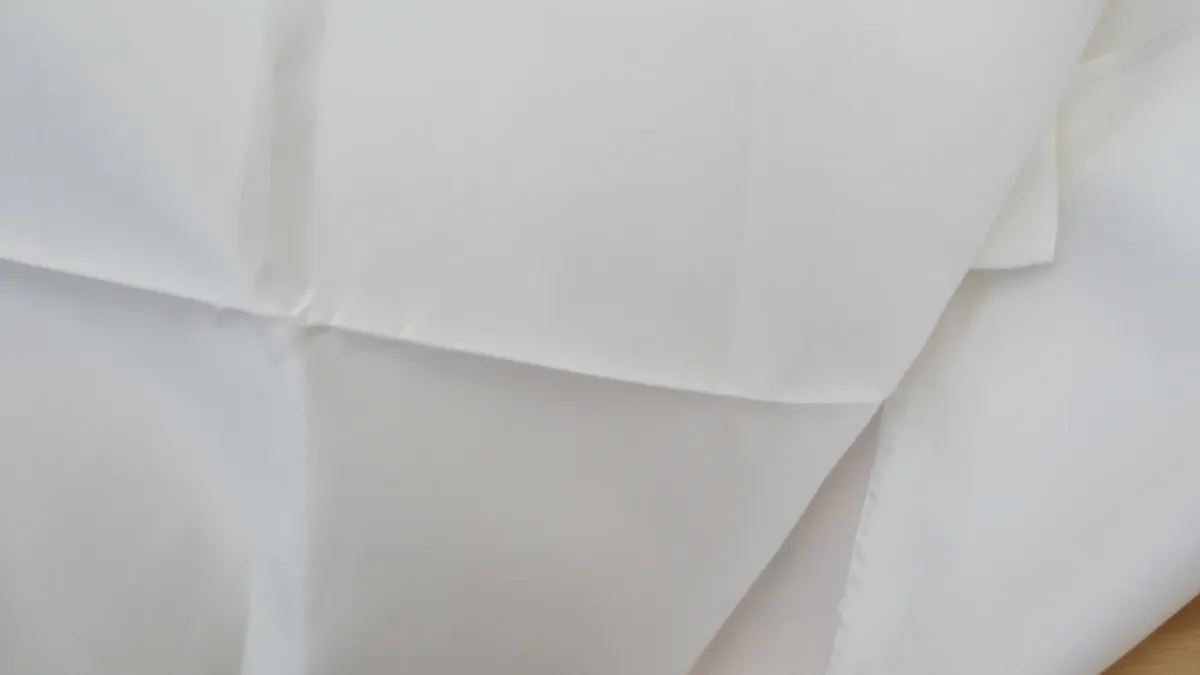
The defining property for designers is memory. Taffeta returns to its shaped form after being smoothed, which is why it reads as "expensive" in motion — a skirt flares and settles instead of clinging. That same memory is also its weakness: a hard crease can set permanently, so handling and storage matter more than with softer weaves.
Why Taffeta Is Back in 2026
After years of soft, bias-cut minimalism, 2026 formalwear has swung back toward structure. Designers are reviving the 1990s and early-2000s silhouettes — sculptural skirts, blouson bodices, and full ballgowns — that simply cannot be built from fluid silks alone. Silk taffeta delivers the volume and the attitude those looks need.
The corsetry revival feeds the trend directly. Boned bodices, waist cinchers, and structured separates all depend on a shell fabric that holds tension without bagging, and taffeta performs where charmeuse would wrinkle and relax. Bridal houses, too, are leaning into cathedral trains and detachable overskirts where taffeta's rustle becomes part of the ceremony.
Quiet-luxury buyers who want presence without loud print or shine have also rediscovered taffeta in solid, deep tones — ink, claret, forest — where the fabric's texture, not a pattern, carries the look. For a B2B buyer, that means taffeta is worth stocking alongside the softer silk chiffon and organza lines you may already carry.
Taffeta Weights and Hand Feel
Taffeta is commonly woven between about 10 and 16 momme, and the chosen weight drives everything from drape to seam behaviour. Lighter cloths rustle more and collapse faster; heavier cloths build architectural volume but need careful pressing. As a reference, one momme equals roughly 4.34 grams per square metre.
| Momme (mm) | Approx. g/m² | Crispness | Best uses |
|---|---|---|---|
| 10 mm | ~43 g/m² | Light, airy crisp | Blouses, overlays, lined skirts |
| 12 mm | ~52 g/m² | Medium crisp | Day dresses, separates, scarves |
| 14 mm | ~61 g/m² | Firm, structured | Bodices, A-line gowns, trims |
| 16 mm | ~69 g/m² | Very firm, sculptural | Ballgowns, corsetry, cathedral trains |
When sampling, judge the cloth by how it springs back after you crush it in your hand. A good taffeta recovers; a weak one stays dented. That single test tells you more about garment performance than the momme number alone.
Taffeta vs Dupioni vs Organza vs Duchess Satin
Four structured silks get confused constantly. Silk dupioni is also crisp but carries slubs from double cocoons; taffeta is smooth. Silk organza is sheer and paper-thin; taffeta is opaque. Duchess satin is heavy and glossy; taffeta is lighter and matte-to-low-sheen. The table below separates them on the points that matter at the cutting table.
| Weave | Structure | Sheen | Opacity | Best use |
|---|---|---|---|---|
| Silk taffeta | Crisp, memory | Low / broken | Opaque | Ballgowns, corsetry, tailoring |
| Silk dupioni | Crisp, slubbed | Subtle lustre | Opaque | Structured dresses, décor |
| Silk organza | Crisp, airy | Soft glow | Sheer | Veils, overlays, volume |
| Duchess satin | Heavy, firm | High gloss | Opaque | Bridal gowns, structured tailoring |
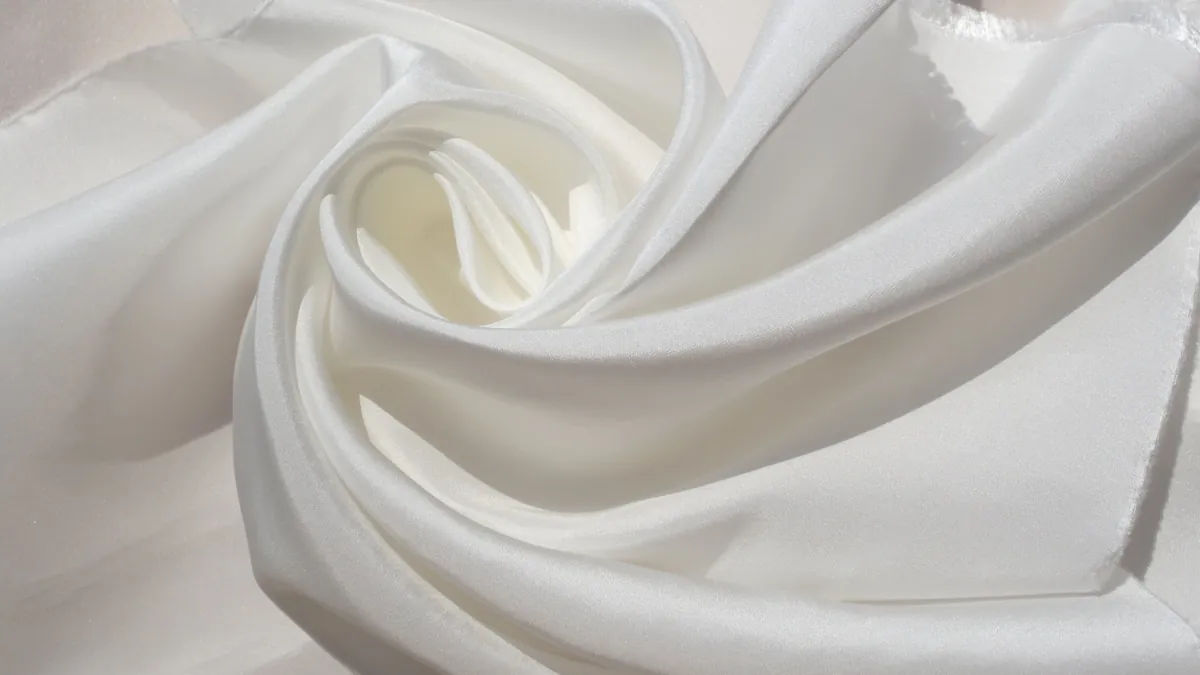
Best Applications for Silk Taffeta Fabric
Silk taffeta fabric earns its place wherever shape must be engineered rather than draped. The classic applications are:
- Ballgowns and A-line skirts — the cloth builds a full skirt without heavy crinoline.
- Bodices and corsetry — holds boning and tension without bagging at the seams.
- Evening separates — peplums, structured tops, and sculptural sleeves.
- Cathedral trains and overskirts — volume with manageable weight.
- Structured linings — gives tailored jackets a crisp, formal interior.
- Ribbons, sashes and bows — taffeta's memory makes a bow hold its shape.
For fashion buyers, taffeta pairs naturally with softer silks in the same collection — a taffeta skirt over a charmeuse bodice, or a taffeta sash on an organza gown. Stocking both lets a brand build contrast within one colour story.
Sewing Silk Taffeta
Taffeta rewards precision and punishes haste. The two problems to manage are needle holes and seam slippage. Use a sharp Microtex needle in size 60/70 to keep punctures tiny, and always test on a scrap first — taffeta shows every hole permanently.
- Baste before you machine-stitch. Taffeta layers shift; hand-basting keeps seams true.
- Press with a cloth and low heat. A press cloth prevents shine and scorching.
- Avoid over-pressing seams open flat. A light roll or tailor's-board press keeps memory.
- Finish edges cleanly. French seams or fine rayon-bound edges prevent the cloth from fraying at the cut.
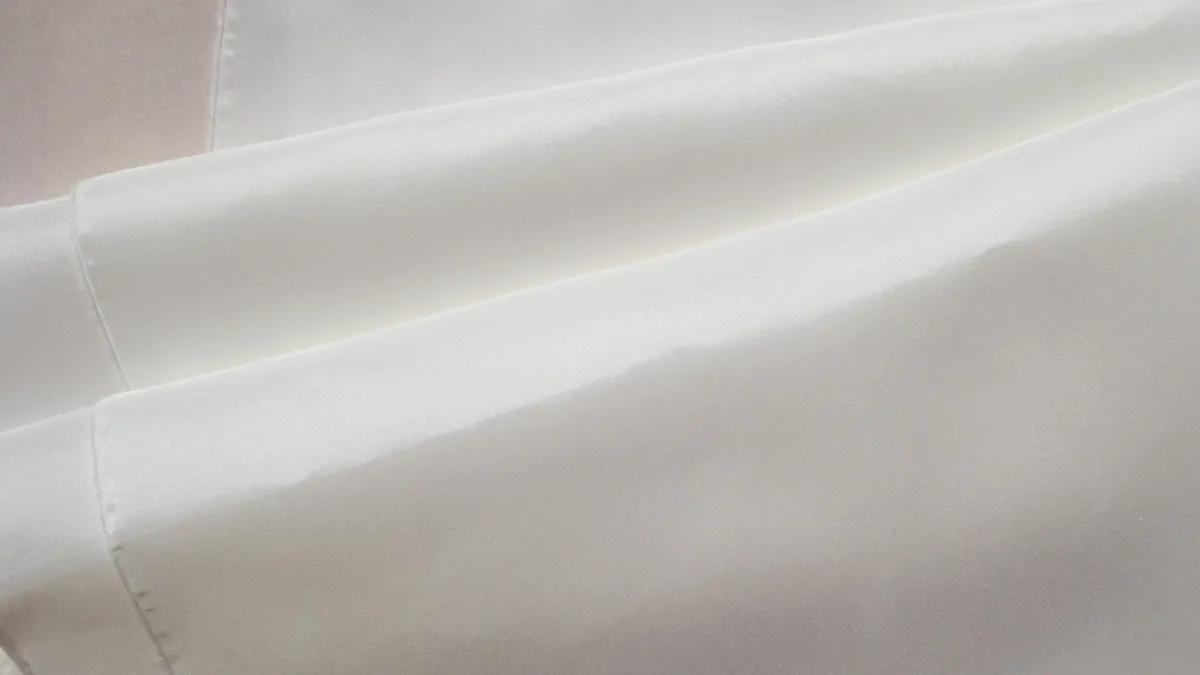
Because taffeta is opaque, lining is often optional for skirts and gowns, though a silk habotai lining improves comfort against the skin and extends wear.
Care and Storage
Taffeta's chief vulnerability is water spotting: a single drop can leave a ring that only even steaming or professional cleaning will remove. For that reason most finished taffeta garments should be professionally dry-cleaned rather than hand-washed.
If you must refresh at home, steam the whole panel evenly from the wrong side behind a press cloth — never spot-spray. Store gowns hanging on padded hangers or rolled on a wide tube; never fold tightly, or the crease will set.
For bolt stock, keep taffeta on the roll away from direct light and humidity. Like all silk, it is a natural protein fibre and will weaken under prolonged sun or damp storage.
How to Source Silk Taffeta
When you buy silk taffeta as a wholesaler or brand, ask the questions that separate a consistent mill from a risky one. Confirm the base is 100% mulberry silk and, if relevant, whether any elastane is blended in. Check the available widths — silk is commonly supplied at 44"/45" or 55"/114cm — and the momme weight you need for your silhouette.
Minimum order quantity is the next lever. Predatex lists MOQ from 1 meter on in-stock qualities, which lets smaller brands sample and run short test batches before committing to a full production cut. Custom colours are accepted, so you can match a seasonal palette rather than settling for stock shades.
Always order swatches first and confirm dye-lot consistency and lead time at quotation. In-stock silk qualities from Predatex typically ship within about 10 working days, but custom-dyed or printed programmes follow their own schedule — lock that down before you promise a delivery date to your own buyers.
For the full range, browse the full silk fabric collection at Predatex Silk, including the structured silks referenced throughout this guide.
Frequently Asked Questions
What is silk taffeta?
Silk taffeta is a plain-woven silk made with tightly twisted yarns in both directions, giving it a crisp, paper-like hand and a subtle rustle. It holds shape far better than soft silks such as charmeuse, which makes it the go-to weave for structured gowns, corsetry and tailored eveningwear.
Taffeta vs satin — what's the difference?
Satin (including charmeuse) is woven on a satin weave that floats threads to the surface for a glossy, fluid drape. Taffeta uses a plain weave with high-twist yarns, so it is crisp, matte-to-low-sheen and sculptural rather than soft and liquid. Choose satin when you want fluid drape, taffeta when you want volume and structure.
Is silk taffeta good for wedding dresses?
Yes. Silk taffeta is a classic choice for ballgowns, A-line skirts, fitted bodices and cathedral trains because it builds volume without heavy interfacing. Its slight rustle reads as luxe in formal settings, though brides wanting a soft, flowing look may prefer silk chiffon or charmeuse instead.
Does silk taffeta wrinkle?
Taffeta resists soft creasing better than fluid silks, but it does mark with sharp folds and can crush along tight seam lines. Steam on a low setting behind a press cloth, and store gowns hanging or rolled rather than folded to avoid permanent crease lines.
How do you get water spots out of taffeta?
Taffeta is prone to water spotting, so avoid localised wetting. If a mark appears, have the garment professionally dry-cleaned; many cleaners steam the whole panel evenly to blend water marks out. For finished goods, spot-test any at-home method on an inconspicuous area first.
What momme is silk taffeta?
Silk taffeta is commonly woven between about 10 and 16 momme, with lighter weights (around 10-12mm) used for blouses and overlays and heavier weights (14-16mm) used for gowns and structured bodices. Exact weights vary by mill and finish.
Request Swatches & a Wholesale Quote
See and feel the crisp hand of silk taffeta fabric for yourself — order swatches and a tailored wholesale quote for your next gown, corsetry or eveningwear line.
Email jasom@predatextile.com · WhatsApp / Skype: +86 182 9825 8162 · imsilk.com