Silk Chiffon Fabric: Light, Airy and Timeless — A 2026 Buyer's Guide
Silk chiffon fabric is the whisper-light, sheer weave that has defined elegant eveningwear and destination weddings for generations. This 2026 guide walks garment brands, bridal ateliers and wholesale buyers through what makes silk chiffon fabric unique, how momme weight affects a design, and how to source it reliably. For the full silk fabric collection, Predatex Silk stocks a range of qualities and finishes.
What Is Silk Chiffon Fabric?
Silk chiffon is a lightweight, balanced plain weave made from very fine silk yarns, usually with a slight crepe twist in the weft that gives the cloth its characteristic soft, matte glow and gentle crinkle. Unlike a crisp silk organza, chiffon has no stiffness; it collapses and flows. Most commercial chiffon is woven from 100% mulberry silk, which is why it feels cool and smooth against the skin.
Weights typically run from about 6 momme to 12 momme, where one momme equals roughly 4.34 grams per square meter, so an 8 momme chiffon weighs about 35 g/m². The sheerness means it is almost always used in layers, as an overlay, or as a floaty sleeve, ruffle or scarf rather than as a stand-alone opaque cloth. Because the open weave frays and shifts easily, plan for that from the start.
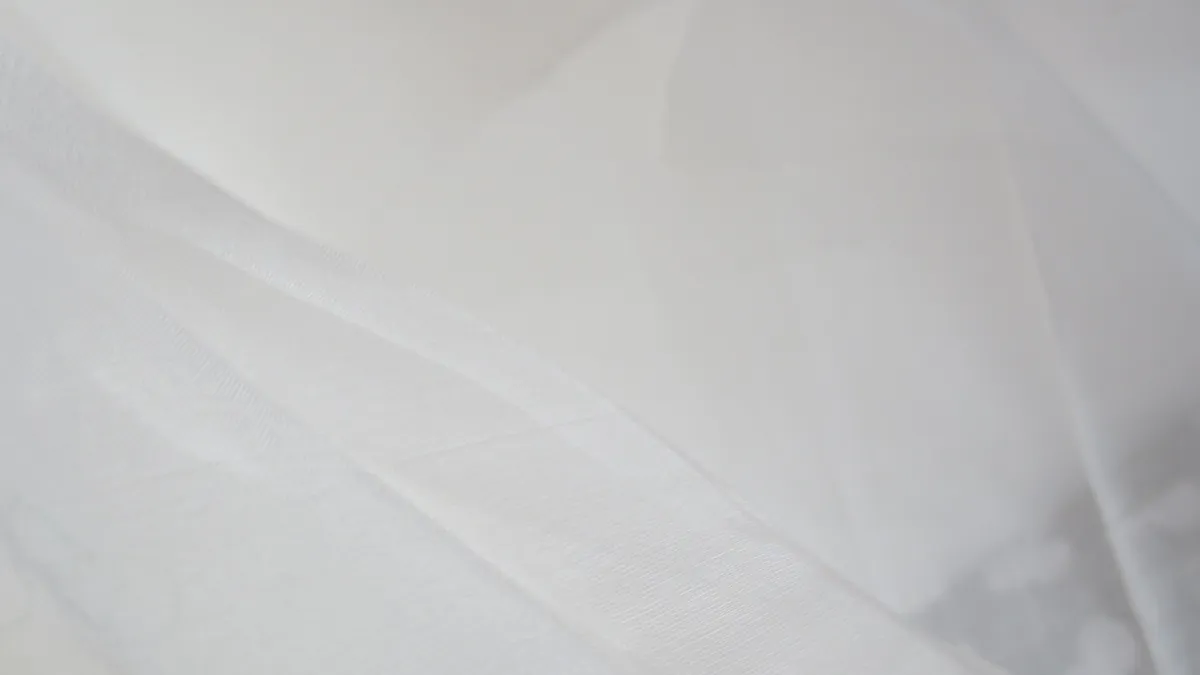
Why Chiffon Remains a Bridal Staple in 2026
The 2026 bridal and resort calendar keeps returning to ethereal, destination-friendly dressing. Beach and garden weddings prize fabrics that move with a sea breeze and photograph softly in natural light, and silk chiffon fabric answers that brief better than almost any other weave.
The same airy hand translates into resort and cruise collections. Commercially, chiffon spans price points, dyes beautifully in solid shades, and takes digital print programs well, so one base cloth can serve bridal, evening and ready-to-wear lines.
Silk Chiffon Momme Weights at a Glance
Momme (mm) is the traditional silk weight unit. The practical range for chiffon is narrow, but the difference between 6 and 12 momme is visible in both hand and opacity. Use the table below as a starting point.
| Momme | Approx. g/m² | Sheerness | Best uses |
|---|---|---|---|
| 6 mm | ~26 g | Very sheer | Scarves, delicate overlays, veils |
| 8 mm | ~35 g | Sheer | Blouse sleeves, ruffles, layered skirts |
| 10 mm | ~43 g | Sheer to semi-sheer | Dresses, resort wear, evening tops |
| 12 mm | ~52 g | Semi-sheer | Layered A-line skirts, structured overlays |
When in doubt, 8–10 momme is the most versatile everyday weight, while 12 momme suits a garment that must read as more substantial under showroom lighting.
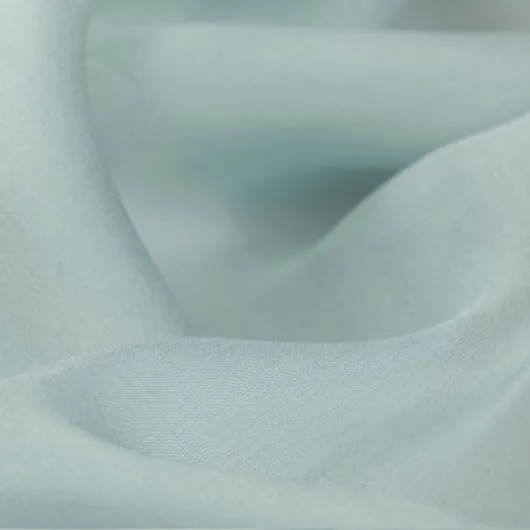
Chiffon vs Organza, Georgette and Tulle
Buyers frequently confuse the sheer weaves. The fastest way to separate them is by hand and behaviour: chiffon flows, organza stands, georgette crinkles with weight, and tulle is a net. The table summarises the trade-offs.
| Weave | Hand / feel | Sheen | Transparency | Best use |
|---|---|---|---|---|
| Chiffon | Soft, fluid, collapsing | Matte glow | Sheer | Overlays, sleeves, scarves, resort |
| Organza | Crisp, stiff, rustles | Flat sheen | Very sheer | Veils, puff sleeves, structured overskirts |
| Georgette | Grippy, crinkled, heavier | Matte | Semi-sheer | Dresses, blouses, wraps |
| Tulle | Net, open, bouncy | Low | See-through net | Volume, petticoats, tutus |
Reach for organza when you need volume that holds a shape, georgette for a grainy matte surface, and chiffon when the brief is purely about float.
Best Applications for Silk Chiffon Fabric
Silk chiffon fabric suits several product categories:
- Evening gowns and bridal dresses — layered skirts, trains and illusion necklines.
- Overlays and veils — a single layer over a lining adds an ethereal halo.
- Scarves and wraps — the classic light luxury scarf base; prints beautifully.
- Blouses and sleeves — blouson, bishop and puff sleeves add movement without weight.
- Resort and cruise wear — kaftans, cover-ups and flowy separates that pack and breathe.
Because chiffon is sheer, plan the lining or underlayer as part of the design; a silk charmeuse or crepe de chine lining gives the cleanest result.
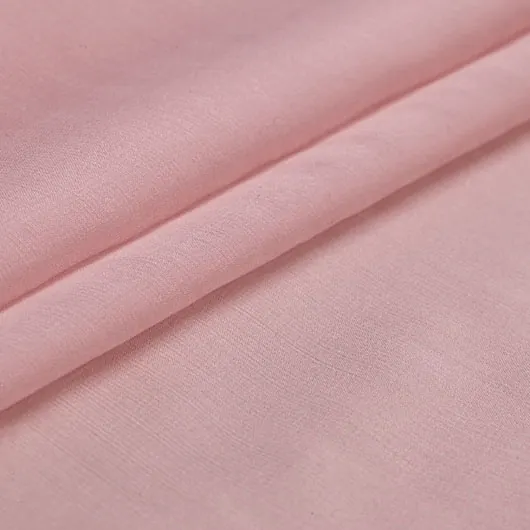
Sewing and Handling Silk Chiffon
The two enemies of chiffon are fraying and shifting. The open plain weave unravels quickly and the soft cloth slides under the presser foot, so chiffon demands a lighter touch than stable weaves like taffeta or organza.
- French seams or narrow rolled hems — enclose every raw edge; a serged edge can look bulky on such a fine cloth.
- Short stitch length — around 1.5–2 mm prevents seams from pulling apart along the bias.
- Stay-stitch curves — necklines and armholes stretch as you handle them; stabilise first.
- Tissue-paper trick — cut and sew with a layer of tissue paper beneath the cloth so it cannot shift; tear the paper away afterwards.
- Needle choice — a microtex or sharp universal needle in size 60/70 avoids snags and runs.
Press gently from the wrong side with a press cloth; never let a hot iron sit on the sheer face, as it can leave a shine.
Caring for Silk Chiffon
Chiffon is delicate but manageable. Hand wash cold at about 30°C with a pH-neutral silk detergent, do not soak, and never wring — wringing distorts the bias and creases the sheer face. Roll in a towel to remove water and dry flat away from direct sun.
If you press, use low steam with a cloth between iron and fabric, or simply hang the garment in a steamy bathroom to release creases. Store chiffon folded in breathable cotton, never plastic.
Sourcing Silk Chiffon Fabric Wholesale
When you buy silk chiffon fabric by the roll, protect your production with consistent dye lots, the right width, and a manageable minimum order. Chiffon is commonly offered in 44"/45" and 55"/140cm widths; confirm which your supplier stocks.
Predatex Silk, a mulberry silk manufacturer and exporter based in Wuhu, Anhui, lists MOQ from 1 meter on in-stock qualities, so small and mid-size brands can order swatches and short trial runs before committing. Their digital printing and solid-dyed series both work on chiffon, and custom colours and print patterns are accepted. Always order swatches first and confirm dye-lot consistency and lead time at quotation; stock qualities typically ship within about 10 working days. For structured bridal looks that pair with chiffon, their silk organza and silk taffeta programs are worth reviewing in the same quote.
Conclusion
For brands building bridal, evening or resort lines, silk chiffon fabric remains one of the most versatile sheer weaves — light enough to float, stable enough to layer. Specifying the right momme, planning the lining, and sourcing from a manufacturer that supports small MOQs keeps production consistent from swatch to shipment.
Frequently Asked Questions
What is silk chiffon?
Silk chiffon is a sheer, lightweight plain-weave fabric made from fine mulberry silk yarns, usually with a slight crepe twist that gives it a soft matte glow and gentle crinkle. It has no stiffness, so it drapes and floats rather than holding shape. Because it is so sheer and fine, it is most often used in layers, as an overlay, or for sleeves, ruffles and scarves rather than as a standalone opaque cloth.
Is silk chiffon good for wedding dresses?
Yes. Silk chiffon fabric is a long-standing favourite for destination, beach and garden weddings because it is airy, breathable and photographs softly in natural light. It is typically layered over a lining such as silk charmeuse or crepe de chine to build A-line skirts, blouson sleeves and cascading ruffles. Its fluid drape reads romantic rather than structural, which suits ethereal 2026 bridal styling.
Chiffon vs organza — which should I choose?
Choose organza when you need crisp volume, structure and a sharper sheer, such as for veils, puff sleeves or overskirts that hold shape. Choose silk chiffon fabric when you want soft, collapsing, fluid drape with a matte glow and no stiffness. Organza rustles and stands; chiffon floats and flows. Your decision should follow the silhouette: structured couture leans organza, ethereal resort and bridal lean chiffon.
Does silk chiffon wrinkle easily?
Chiffon creases less stubbornly than crisper weaves because its soft hand relaxes wrinkles, but it will still crush in packing and under tight elastic. Roll garments rather than fold them, and steam on a low setting with a press cloth rather than pressing directly. A light mist and hanging usually releases travel creases. Lining the chiffon over a stable base cloth also reduces visible wrinkling.
How do you stop chiffon fraying?
Finish every seam with French seams or a narrow rolled hem, since the open plain weave frays quickly. Use a short stitch length (around 1.5–2 mm), stay-stitch curved edges before handling, and cut over a layer of tissue paper so the cloth does not shift under the blade. A microtex or sharp universal needle in size 60/70 helps prevent snags. Press gently and avoid over-handling cut edges.
What momme is silk chiffon?
Commercial silk chiffon fabric is commonly woven between about 6 momme and 12 momme. A 6–8 momme cloth is the sheerest and most delicate, ideal for scarves and overlays; 10 momme is a versatile all-round weight for blouses and dresses; 12 momme gives more body and opacity for layered skirts. One momme equals roughly 4.34 grams per square metre, so these remain very light cloths.
Request Swatches & a Wholesale Quote
Seeing and handling the actual cloth is the only reliable way to specify chiffon for production. Predatex Silk supplies mulberry silk chiffon in solid-dyed and digitally printed qualities, with MOQ from 1 meter on stock lines and custom colours or prints accepted.
Email jasom@predatextile.com · WhatsApp / Skype: +86 182 9825 8162 · imsilk.com