Digital Printed Silk Fabric: How Custom Silk Printing Powers Modern Fashion Brands
Digital printed silk fabric lets a brand turn original artwork into metres of mulberry silk without the screens, minimums and lead times of old-style rotary printing. This guide explains how the process works, which base cloths print best, what to check for quality, and how to order custom silk prints at a workable MOQ.
What Is Digital Printed Silk Fabric?
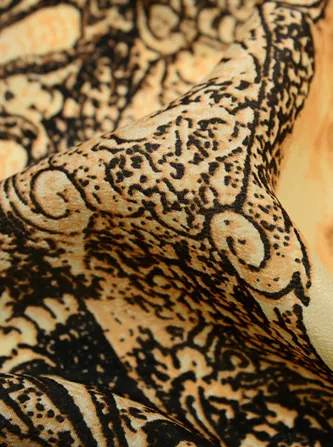
Digital printed silk fabric is 100% mulberry silk printed by inkjet. The cloth is first pre-treated so the ink binds, then printed with dye-sublimation or pigment inks that the machine lays down droplet by droplet from a digital file. After printing, the ink is fixed — commonly by steaming — and the cloth is washed and finished.
The key advantage over rotary screen printing is that there are no screens to engrave. That removes the setup cost and the long lead time that once made custom silk prints the territory of huge orders. It also unlocks detail: photographs, fine lines and soft gradients reproduce cleanly because the "resolution" is set by the printer, not by a mesh. For a brand, that means a one-off scarf or a short capsule can be produced as easily as a bulk run.
Why Digital Printing on Silk Is Booming in 2026
Several forces have converged in 2026. Direct-to-consumer fashion brands want short, frequent drops rather than seasonal bulk, and digital printing matches that rhythm because it needs no screen minimums in the hundreds of metres. Small runs let a brand test a print, read sales, and reorder only what sells.
The "silk scarf top" trend — searches for which have climbed to all-time highs — pushes printed silk into ready-to-wear rather than just accessories, so brands need printed cloth in apparel weights, not just scarf weights. Quiet-luxury and archival-floral aesthetics also favour rich, detailed prints that digital handles better than coarse screen work. For buyers, the practical upshot is more suppliers offering low-MOQ custom silk print programs than ever before.
Frame digital printing as a speed and flexibility tool, not a cost-cutting one. Per metre it is often dearer than screen printing at volume, but it wins on minimums, lead time and design freedom — exactly what small and mid-size brands need.
Best Base Fabrics for Digital Printing
Almost any silk can be printed, but the base cloth changes how the design reads. Smooth, even weaves give the crispest result; textured weaves add character but soften fine detail. The table below maps common bases to their printed personality.
| Base fabric | Surface character | Printed best for |
|---|---|---|
| Charmeuse | Smooth, glossy | Rich colour, eveningwear, slips |
| Crepe de chine | Matte, pebbled | Blouses, dresses, office-to-evening |
| Habotai | Light, even | Scarves, kimonos, lightweight pieces |
| Sandwash silk | Soft, matte, pebbled | Relaxed shirts, scarves, bedding |
| Twill | Diagonal, durable | Scarves, structured pieces, ties |
For a print-led collection, many brands pair a silk charmeuse for drama with a silk crepe de chine for wearability, using the same artwork across both. Silk habotai is the economical entry point for printed scarves.
Print Quality: What to Check
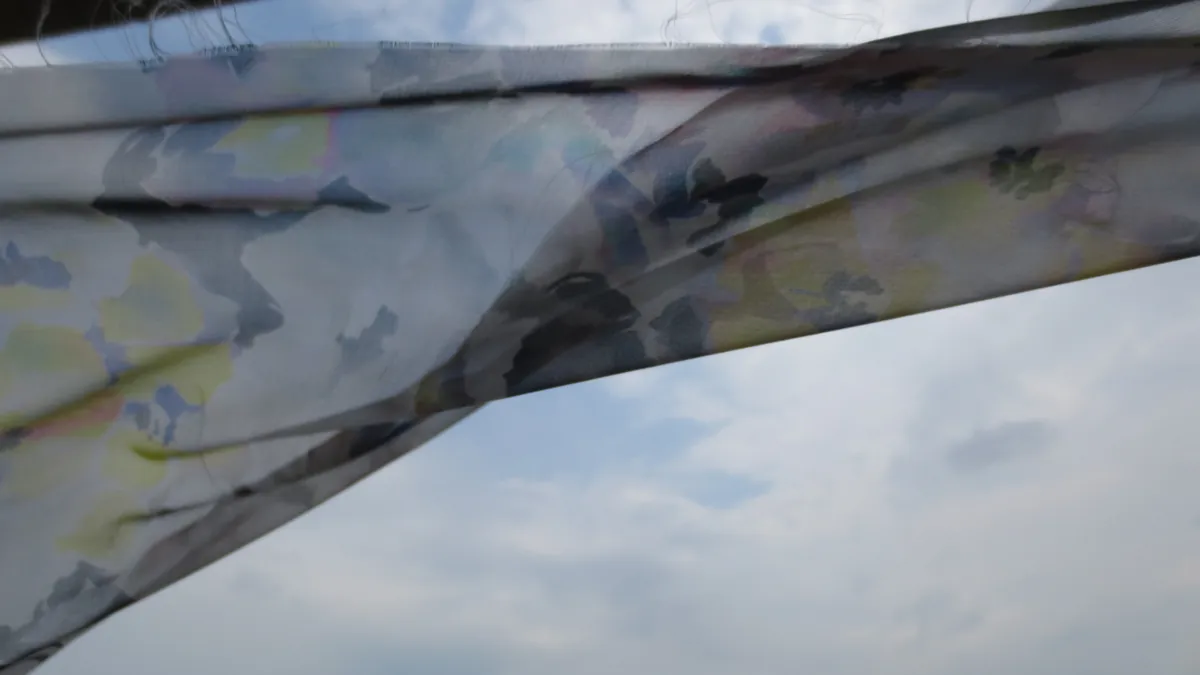
Not all digital silk prints are equal. Before committing to a run, judge these points on a physical swatch:
- Resolution and sharpness. Fine lines and text should stay legible, not bleed.
- Colourfastness. Ask about fixation method and request a crocking (rub) and wash test; properly fixed ink should not transfer or fade in normal care.
- Hand feel. A good print leaves the silk supple; heavy or poorly washed print can stiffen the cloth.
- Pre-treatment cleanliness. Residual chemistry can affect handle and future dyeing, so the cloth should be washed after fixation.
- Colour matching. Confirm how the mill matches your file — Pantone, lab dip, or on-screen — and that metre-to-metre consistency is held across a roll.
2026 Print Directions for Digital Printed Silk Fabric
The strongest print stories on silk in 2026 lean into detail that digital does best. Botanical and archival florals remain evergreen but are rendered with finer, more painterly gradients than screen work allows. Abstract geometry — grids, checkerboards, distorted type — reads sharply on smooth bases like charmeuse and twill.
Statement scarf prints, designed to be worn as tops, favour bold, centred compositions with a border. Soft tonal gradients and "liquid" colour bleeds suit the sandwashed silk matte ground, where the print looks washed and lived-in rather than graphic. Whatever the direction, keep the artwork resolution high and the repeat sized to your garment panels.
From Artwork to Roll
The production path for custom printed silk is straightforward but has fixed steps. It starts with artwork prep — a high-resolution file, typically TIFF, PSD or AI, sized to your repeat. The mill pre-treats the base silk, prints it, then steams to fix the ink, washes out excess chemistry, and finishes (pressing, possibly bonding or softening).
Each step adds time, so lead time is not just "printing." Confirm the full schedule at quotation, especially for custom colours or large metreage. Sampling a single printed metre first is the surest way to validate colour and hand before you commit a production order.
MOQ and Ordering
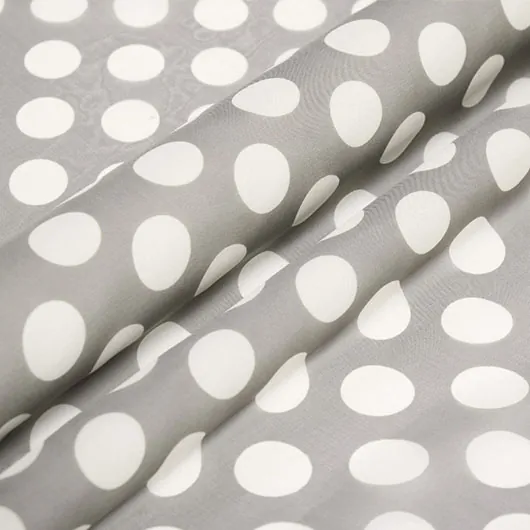
Digital printing typically allows far smaller runs than screen printing, which commonly requires hundreds of metres per design. That low barrier is the whole point for emerging brands. Exact minimums depend on the base fabric and the mill's program, so they should be confirmed per design when you request a quote.
Predatex accepts customised colours and print patterns on its silk qualities, and lists MOQ from 1 meter on in-stock qualities — useful for sampling a printed metre before a larger order. Because printing adds pre-treatment, print, fixation, wash and finish, a printed run follows its own lead time rather than the roughly 10 working days typical of in-stock, unprinted silk.
How to Source Custom Printed Silk
When sourcing digital printed silk, start with the base cloth and the artwork, then confirm the variables that protect your order. Ask for a printed swatch tied to your actual file, not a generic sample, and verify colourfastness with a crocking or wash test. Check the available widths — silk is commonly supplied at 44"/45" or 55"/114cm — and how the mill handles repeat and panel matching.
Order swatches first and confirm dye-lot and print consistency and lead time at quotation. Customised print patterns are accepted by Predatex, so you can supply original artwork or develop a pattern with their team. Lock the minimum per design, the fixation method, and the delivery date before you promise anything to your own buyers.
Browse the full silk fabric collection at Predatex Silk, including the printable bases for digital printed silk fabric — charmeuse, crepe de chine, habotai, sandwash and twill — covered in this guide.
Frequently Asked Questions
What is digital printed silk?
Digital printed silk is 100% mulberry silk printed by inkjet, using dye-sublimation or pigment inks on a pre-treated cloth. Unlike rotary screen printing, it needs no screens, so it reproduces photorealistic detail and gradients and works economically for short runs and one-off designs.
What is the minimum order for custom printed silk?
Digital printing typically allows far smaller runs than screen printing, which commonly requires hundreds of metres per design. Exact minimums depend on the base fabric and the mill's program, so confirm the minimum per design when you request a quote — Predatex accepts customised print patterns and will specify the minimum at quotation.
Which silk fabric is best for digital printing?
Smooth, even-weave silks give the cleanest print. Charmeuse and crepe de chine are favourites for fashion because they show colour richly; habotai is excellent for scarves and lightweight pieces; twill and sandwash silk bring texture and a softer hand. The best base depends on the drape and finish your design needs.
Is digital print on silk colourfast?
When the print is properly pre-treated, steamed for fixation and washed, digital ink on silk is commonly colourfast to light crocking and normal care. Always ask your supplier about fixation method and wash testing, and request a wash/crocking report or do your own lab check before a large run.
How long does custom silk printing take?
Lead time varies by program: sampling a single printed metre can be relatively quick, while a full production run adds pre-treatment, print, steam fixation, wash and finish. Confirm the timeline at quotation, because custom colours and large metres extend the schedule beyond the roughly 10 working days typical of in-stock, unprinted qualities.
Can I print my own design on silk?
Yes. Most mills accept your artwork file — typically a high-resolution TIFF, PSD or AI at the repeat size you need — and print it onto the silk base of your choice. Predatex accepts customised print patterns, so you can supply original artwork or work with their team on a pattern.
Request Swatches & a Wholesale Quote
Turn your artwork into metres of digital printed silk fabric — order printed swatches and a tailored wholesale quote for your next collection.
Email jasom@predatextile.com · WhatsApp / Skype: +86 182 9825 8162 · imsilk.com